

Best Energy Supplements for Chronic Fatigue: 2026 Guide
What are the best energy supplements for chronic fatigue?
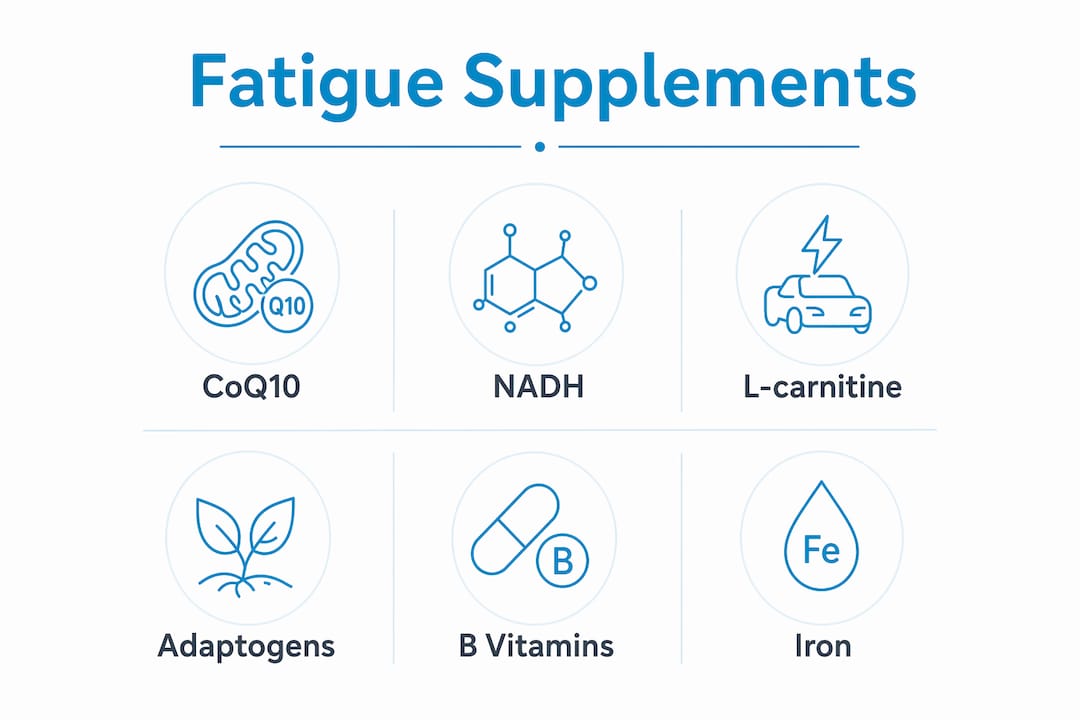
The most clinically supported supplements for chronic fatigue target three root mechanisms: mitochondrial dysfunction, nutrient deficiencies, and stress axis dysregulation. CoQ10, NADH, and L-carnitine lead the evidence base for myalgic encephalomyelitis/chronic fatigue syndrome (ME/CFS). Adaptogens like Ashwagandha and Rhodiola rosea address stress-driven fatigue. Iron, B vitamins, and Ginseng correct metabolic gaps that quietly drain energy.
- CoQ10 (ubiquinol form): 200–300 mg daily; supports mitochondrial ATP production; strongest clinical evidence for ME/CFS fatigue reduction
- NADH: 10–20 mg daily on an empty stomach; works synergistically with CoQ10; minimum 8-week trial recommended
- L-carnitine: 1,000–2,000 mg daily; shuttles fatty acids into mitochondria for fuel; well-tolerated in most people
- Ashwagandha: 300–600 mg daily (KSM-66 or Sensoril extract); reduces cortisol and stress-related fatigue
- Rhodiola rosea: 200–400 mg daily; classified as an adaptogen; targets mental fatigue and cognitive fog
- Iron: Only with confirmed low ferritin (below 30–40 ng/mL); 80 mg elemental iron daily under medical supervision
- Vitamin B12 (methylcobalamin): 1,000 mcg daily; methylated form bypasses common genetic absorption barriers
- Folate (methylfolate): 400–800 mcg daily; pairs with B12 for red blood cell production and neurological function
- Ginseng (Panax): 200–400 mg daily; supports energy metabolism and reduces perceived exertion
No single supplement works for every person with chronic fatigue. The root cause determines which option delivers real results.
Table of Contents
- How each supplement fights fatigue: mechanisms and clinical evidence
- Why testing biomarkers before supplementing changes everything
- How to integrate energy supplements safely into your fatigue management plan
- When fatigue signals something that supplements cannot fix
- What the latest clinical evidence says about fatigue supplements in 2026
- Nexoclub carries the supplements this article covers
- Key Takeaways
How each supplement fights fatigue: mechanisms and clinical evidence
CoQ10 and NADH: the mitochondrial core
CoQ10 functions as an electron carrier in the mitochondrial respiratory chain, the process cells use to generate ATP. In ME/CFS patients, mitochondrial dysfunction is a documented feature, and CoQ10 combined with NADH produces meaningful fatigue reduction after 8–12 weeks of consistent use. The 2015 Castro-Marrero trial confirmed this combination’s benefit, establishing the 8-week minimum as a clinical benchmark.
Bioavailability matters here. The ubiquinol form of CoQ10 absorbs significantly better than standard ubiquinone, particularly in people over 40. Pairing CoQ10 with selenium enhances its antioxidant capacity and mitochondrial electron transport, producing superior symptom relief compared to CoQ10 alone. If you are sourcing mitochondrial support supplements, prioritize ubiquinol over generic CoQ10 labels.
L-carnitine: fuel transport for exhausted cells
L-carnitine moves long-chain fatty acids across the mitochondrial membrane so cells can burn them for energy. Without adequate carnitine, fatty acids accumulate outside the mitochondria and ATP output drops. Clinical data in ME/CFS populations show that L-carnitine supplementation reduces fatigue scores, though effect sizes vary across trials. The acetyl-L-carnitine form also crosses the blood-brain barrier, which may explain reported improvements in cognitive fatigue alongside physical exhaustion.

Ashwagandha and Rhodiola rosea: adaptogens for stress-driven fatigue
Ashwagandha (Withania somnifera) lowers cortisol through modulation of the hypothalamic-pituitary-adrenal (HPA) axis. Elevated cortisol is a recognized driver of fatigue in people under chronic stress, and KSM-66 extract has the most clinical trial data supporting its efficacy. Rhodiola rosea works differently: it activates stress-response proteins and reduces the perception of mental effort, making it particularly useful for cognitive fatigue and brain fog. Both adaptogens are well-suited to fatigue rooted in stress dysregulation rather than pure mitochondrial failure. For readers managing the emotional dimension of chronic fatigue, supplements for emotional balance that include adaptogenic compounds are worth reviewing.

Iron and B vitamins: correcting the metabolic gaps
Iron deficiency, even without full anemia, is an under-recognized cause of persistent fatigue. A meta-analysis of six randomized controlled trials in premenopausal women with nonanemic iron deficiency found that iron supplementation produced an overall decrease in fatigue complaints of more than 60%. A 12-week trial using 80 mg elemental iron daily in women with low ferritin showed a significant reduction in fatigue scores compared to placebo.
Vitamin B12 and folate support red blood cell production and neurological function. About 6% of adults aged 60 and older are deficient in B12, partly because absorption declines with age. The methylcobalamin form is clinically preferred over cyanocobalamin for ME/CFS patients because it bypasses the MTHFR genetic variant that impairs conversion. Folate as methylfolate (5-MTHF) carries the same advantage.
Ginseng: energy metabolism and perceived exertion
Panax ginseng contains ginsenosides that modulate energy metabolism and reduce perceived physical exertion. Clinical trials show modest but consistent reductions in fatigue scores, particularly in cancer-related fatigue and general chronic fatigue populations. Its mechanism differs from mitochondrial supplements: ginseng appears to regulate glucose uptake and reduce oxidative stress rather than directly boosting ATP synthesis.
Pro Tip: Take CoQ10 with a fat-containing meal to maximize absorption. NADH, by contrast, works best on an empty stomach, 30 minutes before eating.
Why testing biomarkers before supplementing changes everything
Supplementing without testing is guesswork with real consequences. Iron overload from unnecessary supplementation can damage the liver and heart. High-dose B12 without a confirmed deficiency produces no energy benefit. Testing first tells you exactly where the gap is.
Key tests to request from your healthcare provider:
- Ferritin: Levels below 30–40 ng/mL indicate iron deficiency even when hemoglobin is normal; non-anemic women with ferritin at or below 50 µg/L showed fatigue improvements with iron supplementation
- Serum B12 and methylmalonic acid (MMA): MMA is a functional marker; elevated MMA with normal serum B12 still indicates cellular B12 insufficiency
- Homocysteine: Elevated levels signal inadequate B12 or folate, independent of serum readings
- Red blood cell magnesium: More accurate than serum magnesium for assessing true cellular status; approximately 48% of the U.S. population consumes less than the required daily amount of magnesium
- Vitamin D (25-OH): Low vitamin D reduces muscle strength and mood, both of which compound fatigue
- Thyroid panel (TSH, free T3, free T4): Hypothyroidism mimics chronic fatigue almost exactly
Correcting a confirmed deficiency produces faster and more reliable fatigue improvement than any general supplement protocol. The Cleveland Clinic recommends identifying the root cause of fatigue before initiating supplementation, precisely because fatigue’s origin determines which intervention works.
Pro Tip: Ask your doctor for methylmalonic acid and homocysteine alongside standard serum B12. Standard B12 alone misses functional deficiency in a meaningful portion of patients.
How to integrate energy supplements safely into your fatigue management plan
Starting multiple supplements at once makes it impossible to know what is working or what is causing a side effect. ME/CFS patients often have heightened sensitivities, so a gradual, monitored approach is not optional — it is the protocol that clinical guidelines recommend.
Recommended introduction sequence:
- Start with CoQ10 (ubiquinol, 100 mg), magnesium glycinate (300–400 mg before bed), and methylated B-complex
- After 4 weeks, assess tolerance and add vitamin D3 and omega-3s if not already in your diet
- At week 8, introduce NADH (10 mg on an empty stomach) and L-carnitine (500 mg, increasing gradually)
- Adaptogens (Ashwagandha or Rhodiola rosea) can be added at week 10–12 if stress-related fatigue is prominent
Timing and food matter. To minimize gastrointestinal distress, use a sandwich approach: eat a small amount of food, take the supplement, then finish eating. This is especially relevant for iron and magnesium, which commonly cause nausea on an empty stomach.
Lifestyle factors amplify every supplement on this list. Harvard Health research confirms that 14% of Americans report insufficient energy, and exercise, despite feeling counterintuitive when fatigued, increases endorphin and catecholamine levels that directly improve energy and sleep quality. The target is at least 150 minutes of aerobic activity per week, adjusted for your current capacity. A low glycemic diet, seven to nine hours of sleep, and stress management are not optional lifestyle additions — they are the foundation that supplements build on.
Potential side effects to monitor:
- CoQ10: mild insomnia if taken late in the day; rare GI upset
- Iron: constipation, nausea; toxicity risk with over-supplementation
- Ashwagandha: sedation at high doses; contraindicated in thyroid conditions without medical clearance
- L-carnitine: fishy body odor at high doses; rare GI discomfort
- Rhodiola rosea: mild agitation or insomnia in some people, particularly at doses above 400 mg
Always disclose supplement use to your healthcare provider. Several interact with medications: iron reduces absorption of thyroid drugs, B12 can be depleted by metformin, and Ashwagandha may amplify sedative medications.
For sourcing vitamins for energy and tiredness, choosing products with third-party testing certificates reduces the risk of contamination or mislabeled doses.
When fatigue signals something that supplements cannot fix
Supplements address nutritional gaps and support cellular function. They do not treat underlying medical conditions. Certain fatigue patterns require medical evaluation before any supplement protocol begins.
Seek prompt evaluation if you experience:
- Sudden onset fatigue with no identifiable trigger, especially after an infection
- Neurological symptoms alongside fatigue: numbness, vision changes, coordination problems
- Unintentional weight loss of more than 5% of body weight over 6–12 months
- Fever, night sweats, or swollen lymph nodes concurrent with fatigue
- Chest pain or shortness of breath during minimal exertion
- Fatigue that worsens after rest rather than improving, which is a hallmark of ME/CFS requiring specialist diagnosis
- Mood changes severe enough to impair daily function, which may indicate depression or anxiety as the primary driver
Conditions that commonly present as fatigue include hypothyroidism, anemia, sleep apnea, depression, rheumatoid arthritis, and early-stage diabetes. Each has a specific treatment. Supplementing around an undiagnosed thyroid disorder, for example, delays effective care and may worsen outcomes. Honest, detailed communication with your healthcare provider about fatigue severity, duration, and any supplements you are already taking is the fastest path to an accurate diagnosis. Resources like wellness fatigue recovery guidance can help you frame your symptoms before a clinical appointment.
What the latest clinical evidence says about fatigue supplements in 2026
A 2025 systematic review published in PMC confirms that CoQ10, NADH, and L-carnitine have the strongest clinical evidence for reducing fatigue in ME/CFS through mitochondrial support. The review reinforces a tiered protocol: begin with CoQ10, magnesium, vitamin D3, omega-3s, and methylated B-complex, then add NADH and carnitine after baseline tolerance is established.
The review also highlights that functional testing, specifically methylmalonic acid for B12 status and red blood cell magnesium rather than serum magnesium, provides better clinical guidance than standard markers. This distinction changes which supplements a person actually needs versus which ones they assume they need.
Key clinical trial outcomes:
- CoQ10 with selenium: significant fatigue reduction in ME/CFS; gradual introduction recommended due to sensitivities
- Iron (80 mg elemental daily, 12 weeks): significant reduction in fatigue scores in non-anemic women with low ferritin compared to placebo
- Folate (1 mg daily, 3 months): reduced fatigue perception in thalassemic patients in a controlled trial
- CoQ10 plus NADH combination: Castro-Marrero 2015 trial confirmed benefit; minimum 8-week trial period established
Practitioners consistently note that bioavailability determines whether a supplement delivers its theoretical benefit. Ubiquinol over ubiquinone, methylcobalamin over cyanocobalamin, and methylfolate over folic acid are not marketing distinctions — they reflect real differences in absorption and cellular utilization, particularly for people with common genetic variants affecting nutrient metabolism.
Nexoclub carries the supplements this article covers
Chronic fatigue management requires consistent, quality-controlled supplementation. Nexoclub stocks a curated range of energy and cellular health supplements, including an NAD+ Booster with Resveratrol formulated for mitochondrial function and cellular vitality, and a Vitamin B12 5,000 mcg supplement in the methylcobalamin form this article recommends.
For people rebuilding physical capacity alongside fatigue recovery, Nexoclub’s Muscle Builder Capsules support strength, endurance, and energy recovery, directly relevant to the gradual exercise reintroduction that clinical guidelines recommend. Every product listing includes detailed ingredient information and dosage guidance so you can match what you buy to the protocol your healthcare provider has outlined. Browse the full supplement range at Nexoclub and use the product descriptions to cross-reference the formulations covered in this article.
Key Takeaways
CoQ10, NADH, and L-carnitine have the strongest clinical evidence for reducing fatigue in ME/CFS, but biomarker testing must precede supplementation to ensure the right protocol for each individual.
| Point | Details |
|---|---|
| Top mitochondrial supplements | CoQ10 (ubiquinol form), NADH, and L-carnitine have the strongest clinical evidence in ME/CFS. |
| Test before you supplement | Ferritin, methylmalonic acid, and red blood cell magnesium reveal deficiencies that serum tests miss. |
| Iron evidence is specific | Non-anemic women with low ferritin showed significant fatigue reduction with elemental iron supplementation under medical supervision. |
| Introduce supplements gradually | Start with CoQ10, magnesium, and methylated B-complex; add NADH and L-carnitine after 8 weeks of tolerance. |
| Nexoclub supplement range | Nexoclub stocks NAD+ boosters, methylcobalamin B12, and muscle recovery formulas aligned with this protocol. |