

Best Supplements for Toning Female: What Actually Works
What are the best supplements for female muscle toning?
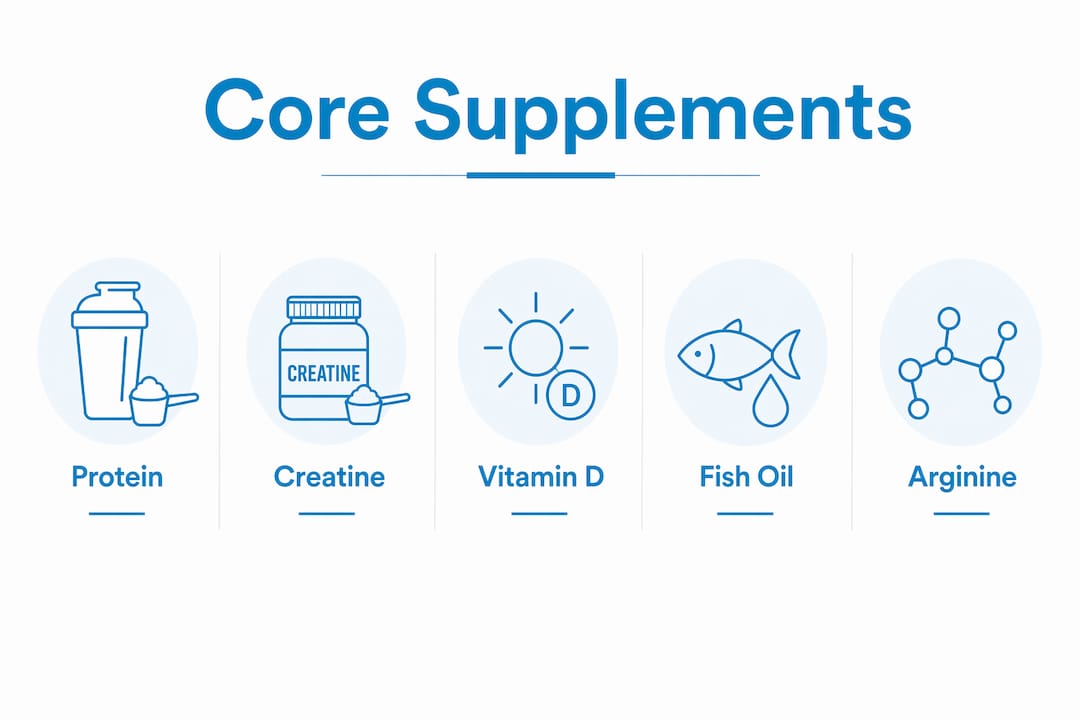
The best supplements for toning female physiology are protein, creatine, vitamin D, fish oil, and arginine. Each targets a specific gap in how women build and maintain lean muscle, particularly across hormonal shifts like the menstrual cycle and menopause. No supplement replaces resistance training, but the right stack closes the gap between effort and visible definition.
- Protein: Drives muscle protein synthesis; aim for 1.2–2.2g per kilogram of body weight daily, with leucine-rich servings providing 2–3g per 30g.
- Creatine: Boosts strength and lean mass; women store 70–80% less than men
- Vitamin D: Supports muscle function and bone density, especially post-40
- Fish oil (omega-3s): Reduces inflammation and supports muscle protein synthesis
- Arginine: Stimulates nitric oxide and growth hormone production
How protein builds the foundation for muscle tone in women
Protein is the single most important dietary driver of muscle tone. Without adequate intake, no amount of training produces lasting definition. Women should target 1.2–2.2g of protein per kilogram of body weight daily, with the lower end for maintenance and the upper end when actively building.
The key variable inside that range is leucine. Protein servings should contain enough leucine, the amino acid that directly triggers muscle protein synthesis. Whey protein delivers this reliably. Plant-based proteins like soy and pea can work but require attention to amino acid completeness.
| Protein Source | Leucine per 30g Serving | Absorption Speed | Complete Amino Profile |
|---|---|---|---|
| Whey concentrate | 2.2g–3g | Fast | Yes |
| Whey isolate | 2.2g–3g | Very fast | Yes |
| Soy protein | 2g | Moderate | Yes |
| Pea protein | 1.2g–2.2g | Moderate | Partial |
| Rice protein | 1.2g–2.2g | Slow | No |
Timing matters as much as total intake. Spacing protein every 3–4 hours and consuming a serving within 30–60 minutes after exercise maximizes synthesis. Women over 50 face anabolic resistance, meaning the body needs more protein stimulus to maintain lean mass, making consistent dosing across the day non-negotiable.
- Aim for an adequate total amount of protein daily as a practical starting target
- Prioritize whole food protein sources first; use protein powder to close gaps
- Choose protein powders that provide essential amino acids and have minimal additives
- High protein intake becomes especially critical after age 50–55 due to menopause-related muscle loss
Pro Tip: During the luteal phase of your cycle, progesterone increases muscle breakdown. Bump your protein intake toward the upper end of your range (closer to 2.2g/kg) during those 10–14 days to offset the catabolic effect.
Why creatine is one of the most effective female toning supplements
Creatine is the most research-backed supplement for strength and lean mass, and women are the group most likely to benefit from it. Female creatine stores run 70–80% lower than men’s, largely because women carry less lean tissue and often eat less red meat. Supplementation fills that gap directly.
The standard dose is 5–10g per day. Timing is flexible; take it whenever it fits your routine. During menopause, 0.3g per kilogram per day may be needed to counter the muscle loss driven by low estrogen. Research shows creatine improves strength, muscle size, bone density, and even cognitive function across hormonal transitions including menstruation and menopause.
The weight gain concern often associated with this supplement is less pronounced in women, who typically experience strength and performance gains without marked changes in body weight.
- Dose: a few grams daily for most women; no loading phase required
- Choose products that minimize gastrointestinal discomfort
- Benefits extend beyond muscle to include improvements in bone density and cognition with consistent use
- For full effect, pair supplementation with resistance training where muscles are actively loaded
Pro Tip: If you track your cycle, consider increasing your creatine dose slightly during the luteal phase, when estrogen drops and muscle protein synthesis slows. Consistent daily dosing is more important than perfect timing, but phase-aware adjustments add a meaningful edge.
Nexoclub carries creatine monohydrate capsules formulated for muscle strength and training support, non-GMO and gluten-free.
Which vitamins and nutrients support muscle tone and recovery?
Vitamin D
Vitamin D deficiency links directly to muscle weakness and mass loss, particularly in aging women. Levels below 29 ng/mL correlate with poor lower body function and elevated fracture risk. Supplementation with vitamin D3 (cholecalciferol) improves muscle strength in postmenopausal women with insufficient levels. Take it with a fat-containing meal or alongside fish oil to maximize absorption. Women who spend most of their time indoors or live in northern climates during winter months are at highest risk of deficiency.
Fish oil (omega-3 fatty acids)
Omega-3 fatty acids support muscle protein synthesis at the molecular level and reduce the inflammation that slows recovery between training sessions. Some studies suggest muscle mass gains are more pronounced in women performing resistance training when omega-3 intake is adequate. Choose purified, high-quality fish oil to avoid contaminants. Whole food sources like salmon, sardines, and mackerel provide a naturally balanced omega-3 profile alongside other nutrients. Pairing fish oil with vitamin D3 also enhances D3 absorption, making the combination practical and efficient.
Arginine
Arginine is a conditionally essential amino acid that supports muscle protein synthesis, creatine production, nitric oxide synthesis, and growth hormone secretion. Doses of 3–9g per day support improvements in athletic performance. No gender-specific dosing data currently exists, so the general range applies to women. Nitric oxide production from arginine improves blood flow to working muscles, which can enhance both performance and recovery.
- Vitamin D, calcium, and magnesium work together for bone health and muscle function; supplementing one without the others reduces overall effectiveness
- Estrogen regulates vitamin D metabolism, so declining estrogen during perimenopause makes adequate D3 intake more urgent
- Antioxidant support from omega-3s reduces oxidative stress that accumulates with consistent training
How to choose and use female toning supplements safely
Quality varies widely across the supplement market. High-quality products prioritize bioavailability, accurate dosing, and minimal additives. Look for third-party testing certifications (NSF, Informed Sport, or USP) on any product label. Capsules and tablets generally deliver more reliable dosing than gummies, which often contain added sugar and lower nutrient concentrations.
Supplements work within a system. Hormone fluctuations across the menstrual cycle, pregnancy, and menopause alter protein metabolism and supplementation needs. Aligning intake with those phases, rather than using a static daily routine, produces better results over time.
On thermogenic supplements and fat burners: most carry stimulant loads (caffeine, synephrine) that can disrupt sleep and raise heart rate. Women sensitive to stimulants should start at the lowest labeled dose or avoid them entirely. Fat burners do not replace a caloric deficit and carry a higher side-effect profile than protein, creatine, or vitamin D.
BCAAs (branched-chain amino acids) are widely marketed but show limited additional benefit for postmenopausal women who already meet protein targets. If your total protein intake is adequate and leucine-rich, a standalone BCAA supplement adds little.
Pro Tip: Before adding any new supplement, check with your primary care provider, especially if you take medications or have a condition affecting hormones, kidneys, or liver. Some supplements interact with common prescriptions.
Nexoclub’s Muscle Builder Capsules are formulated to support strength, endurance, and muscle recovery for women actively training.
Key Takeaways
Protein, creatine, vitamin D, fish oil, and arginine form the core supplement stack for female muscle toning, with dosing and timing adjusted for hormonal life stages.
| Point | Details |
|---|---|
| Protein is the foundation | Target 1.2–2.2g per kilogram daily; prioritize leucine-rich sources with 2–3g per 30g serving. |
| Creatine fills a female-specific gap | Women store 70–80% less creatine than men; 5–10g daily improves strength, bone density, and cognition. |
| Vitamin D deficiency undermines muscle | Levels below 29 ng/mL link to poor lower body function; supplement with D3 taken alongside fat. |
| Cycle phase changes protein needs | The luteal phase raises muscle breakdown; increase protein toward 2.2g/kg during those days. |
| Quality and third-party testing matter | Choose supplements with verified dosing and minimal additives; capsules outperform gummies for accuracy. |