

Best Plant-Based Iron Supplements for Vegans in 2026
What are plant-based iron supplements and do they work?
Plant-based iron supplements are formulations derived from botanical sources, such as curry leaf extract (Murraya koenigii) and amla (Phyllanthus emblica), designed to deliver elemental iron without synthetic iron salts. They target vegans and plant-based eaters who need reliable iron support but want to avoid the gastrointestinal side effects common with conventional ferrous sulfate.
The clinical evidence is direct. A 2025 randomized double-blind trial involving 96 adults with iron-deficiency anemia found that 18 mg of plant-based iron from curry leaf extract combined with 90 mg of plant-based vitamin C from amla produced statistically significant improvements in hemoglobin and red blood cell counts over 60 days. Both treatment groups outperformed placebo, with the combination formula showing the greatest gains.
Key advantages over synthetic iron salts include:
- Better gut tolerability. The same trial reported no adverse events, and participants noted improved energy and quality of life, pointing to superior gastrointestinal tolerance compared to synthetic options.
- Enhanced absorption through natural cofactors. Vitamin C from amla reduces ferric iron (Fe³⁺) to the more absorbable ferrous form (Fe²⁺), directly raising bioavailability.
- Improved adherence. Fewer side effects translate to consistent daily use, which is the practical prerequisite for correcting deficiency.
- Whole-food compatibility. Botanical extracts retain bioflavonoids and co-nutrients that mimic the iron matrix found in whole foods.
For vegans specifically, these formulations address the core challenge: non-heme iron from plants absorbs less efficiently than heme iron from animal sources, so the supplement’s design matters as much as its dose.
Why do vegans face higher iron deficiency risks?
Vegans rely entirely on non-heme iron, the form found in plants. Non-heme iron absorption is highly variable and sensitive to dietary factors, whereas heme iron from meat absorbs more consistently regardless of what else is in the meal. This physiological difference means vegans can consume adequate total iron yet still develop deficiency if absorption is chronically low.
Several dietary factors compound the problem:
- Phytates in whole grains and legumes bind iron and reduce uptake.
- Polyphenols in tea, coffee, and red wine inhibit non-heme iron absorption when consumed at meals.
- Calcium from dairy alternatives or supplements competes with iron at the intestinal absorption site.
- Low heme iron intake removes the absorption-enhancing effect that heme iron exerts on non-heme iron in mixed diets.
Statistic callout: The NIH Office of Dietary Supplements notes that vegetarians and vegans may need up to 1.8 times the recommended dietary allowance for iron compared to meat-eaters, due to the lower bioavailability of non-heme iron.
Symptoms of iron deficiency anemia include fatigue, pallor, brain fog, shortness of breath, and reduced physical performance. Diagnosis requires blood tests measuring hemoglobin, serum ferritin, and transferrin saturation. Ferritin is particularly useful because it reflects stored iron and can drop before hemoglobin falls, giving an early warning. If you suspect deficiency, a simple blood panel from your primary care provider confirms it.
How to boost iron levels on a plant-based diet
Diet comes first. The richest plant-based iron sources include dried lentils and beans, tofu, tempeh, pumpkin seeds, hemp seeds, quinoa, fortified cereals, and dark leafy greens like spinach and Swiss chard. The Quadram Institute identifies dried beans, seeds, leafy greens, and whole grains as the best natural vegan iron sources, though all deliver non-heme iron with lower bioavailability than fortified supplements.
Practical steps to raise absorption from food and supplements:
- Pair iron-rich meals with vitamin C sources: bell peppers, citrus juice, strawberries, or kiwi eaten at the same meal can meaningfully raise non-heme iron uptake.
- Separate iron intake from tea, coffee, and calcium-rich foods by at least one hour.
- Cook in cast iron when possible; acidic foods like tomato sauce pick up small amounts of dietary iron from the pan.
- Take iron supplements on an empty stomach or with a small vitamin C-rich snack for maximum absorption. If stomach sensitivity is an issue, taking the supplement with a light meal is a reasonable trade-off.
- Avoid taking iron alongside zinc or calcium supplements, as these minerals compete for the same absorption pathway.
Pro Tip: Combine a botanical iron supplement that already contains plant-sourced vitamin C, such as amla or acerola extract, with a small glass of orange juice at the time of dosing. This double vitamin C load maximizes the reduction of Fe³⁺ to Fe²⁺ in the gut and gives non-heme iron its best chance at absorption.
For vegans with confirmed deficiency, diet alone rarely corrects low ferritin fast enough. Supplementation fills the gap while dietary habits improve. A Vitamin B12 supplement is also worth considering alongside iron, since B12 deficiency is common in vegans and both nutrients affect red blood cell production.
Comparing the top vegan iron supplements available in the US
Several notable products stand out for vegans shopping the US market. Each uses a distinct formulation approach, and the differences matter for absorption, tolerance, and daily convenience.
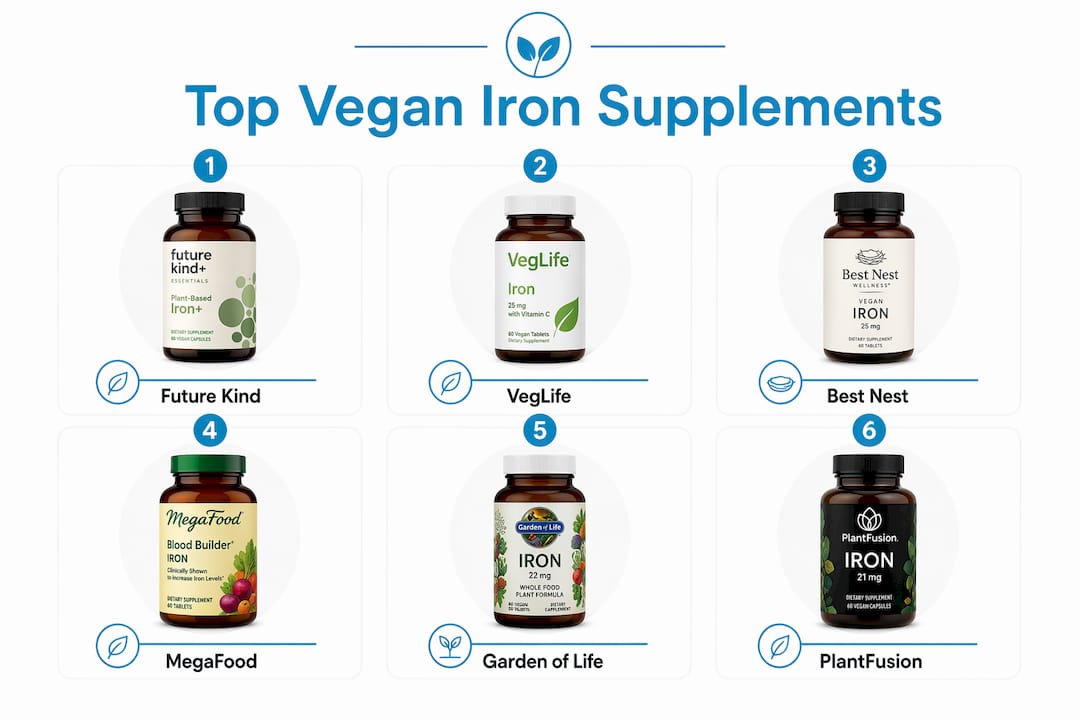
| Product | Iron form and dosage | Absorption enhancers | Supplement type | Best for |
|---|---|---|---|---|
| Future Kind Vegan Iron + Vitamin C | Botanical iron + vitamin C | Vitamin C (plant-sourced) | Capsule | Vegans wanting well-absorbed botanical iron |
| VegLife Vegan Iron Plus | Iron bisglycinate + cofactors | Folic acid, vitamin B12 | Tablet | Gentle daily iron with B-vitamin support |
| Best Nest Wellness Clever Bird Liquid Iron | Liquid botanical iron | Botanical cofactors | Liquid | Flexible dosing, easy absorption |
| MegaFood Blood Builder Minis | Whole food iron blend | Vitamin C, organic herbs | Mini tablet | Whole food iron with herbal support |
| VegLife Vegan Iron Plus Vitamin C, Folic Acid and B12 | Iron bisglycinate | Vitamin C, folic acid, B12 | Tablet | Multinutrient support for vegans |
| Garden of Life Vitamin Code Raw Iron Supplement | Raw food-created iron, 22 mg | Probiotics, enzymes, vitamin C | Capsule | Digestive support alongside iron |
| PlantFusion Complete Iron Vegan Vitamin | Plant-based iron complex | Vitamin C, digestive enzymes | Capsule | Comprehensive iron with enzyme support |
Future Kind Vegan Iron + Vitamin C pairs botanical iron with plant-sourced vitamin C in a single capsule, directly mirroring the combination formula validated in the 2025 clinical trial. It carries vegan and non-GMO certifications and is designed for daily use without the constipation associated with ferrous sulfate.
VegLife Vegan Iron Plus takes a gentler approach, using iron bisglycinate, a chelated form known for lower GI irritation, alongside folic acid and vitamin B12. The B-vitamin addition is practical for vegans since both nutrients support red blood cell synthesis. The expanded version, VegLife Vegan Iron Plus Vitamin C, Folic Acid and B12, adds vitamin C to the same formula, making it a more complete daily option for vegans managing multiple deficiency risks at once.
Best Nest Wellness Clever Bird Liquid Iron stands apart on format. Liquid iron allows dose adjustment, which suits people who need to titrate up gradually or who have difficulty swallowing capsules. Absorption from liquid forms can be faster than from tablets, and the botanical ingredient base keeps the side effect profile low.
MegaFood Blood Builder Minis uses a whole food matrix, combining iron with organic herbs and vitamin C in a small tablet format. The mini size improves compliance for people who find standard tablets uncomfortable. MegaFood’s whole food approach means the iron is delivered within a food-based nutrient matrix rather than as an isolated compound.
Garden of Life Vitamin Code Raw Iron adds probiotics and digestive enzymes to a 22 mg raw iron formula. For vegans who experience digestive sensitivity with any iron supplement, the probiotic component may help maintain gut comfort. The raw, food-created processing method preserves co-nutrients from the whole food blend.
PlantFusion Complete Iron integrates vitamin C and digestive enzymes in a single capsule, targeting both absorption and tolerance simultaneously. It suits vegans who want a single-product solution without stacking separate digestive supplements.
How to choose the right plant-based iron supplement
No single formula works for every person. The right choice depends on deficiency severity, digestive sensitivity, dietary habits, and whether you need additional nutrients alongside iron.
Key factors to evaluate as you consider choosing the right supplement fulfillment company for your plant-based iron supplements:
- Dosage. Mild deficiency may respond to 18–25 mg of elemental iron daily. Confirmed anemia with low hemoglobin often requires higher doses under medical guidance. Check the elemental iron content on the label, not just the total compound weight.
- Absorption enhancers. A formula that includes vitamin C is preferable for most vegans. Amla and acerola are the most studied plant-sourced vitamin C options in iron supplements.
- Supplement form. Capsules and tablets suit most people. Liquid iron (like Clever Bird) is better for those with swallowing difficulties or who need flexible dosing. Mini tablets (like Blood Builder Minis) improve adherence when standard tablets feel too large.
- Certifications. Look for certified vegan, non-GMO, and third-party tested labels. These signal ingredient transparency and manufacturing standards.
- Tolerance history. If you have had GI issues with iron before, prioritize iron bisglycinate or botanical iron over ferrous sulfate-based products. Both chelated and botanical forms consistently show lower rates of constipation and nausea.
Pro Tip: Take your iron supplement at least two hours apart from any calcium supplement, antacid, or thyroid medication. Iron and calcium compete for the same intestinal transporter, and antacids raise gut pH, reducing iron solubility.
Individuals with thalassemia should not take any iron supplement without direct medical supervision. Thalassemia already affects red blood cell production, and unsupervised iron supplementation carries a real risk of iron overload, which damages organs over time. Anyone with a chronic blood disorder, kidney disease, or hemochromatosis needs a physician’s sign-off before starting iron supplementation of any kind.
Reading the label carefully matters. A product listing “iron” without specifying the form (bisglycinate, ferrous fumarate, botanical extract) gives you less information to work with. Transparent brands list the iron compound, elemental iron content per serving, and all cofactors separately.
What does the research say about botanical iron supplements?
The clinical picture for botanical iron formulations has sharpened considerably. The 2025 randomized controlled trial published in PMC is the most direct evidence available: 96 adults with iron-deficiency anemia received either 18 mg of plant-based iron from curry leaf extract alone, the same iron combined with 90 mg of plant-based vitamin C from amla, or a placebo for 60 days. Both treatment groups showed statistically significant hemoglobin improvement compared to placebo (p<0.001), with the combination group achieving the greatest gains. Red blood cell counts increased (p<0.05), transferrin levels decreased significantly (p<0.0001), and no adverse events occurred in either treatment group.
Statistic callout: In the combination group, participants receiving plant-based iron plus vitamin C showed the greatest increase in hemoglobin and red blood cell counts among all three arms, confirming improved erythropoiesis (2025 clinical trial, 96 adults with iron-deficiency anemia, 60 days treatment).
The mechanism is well understood. Vitamin C reduces ferric iron (Fe³⁺) to ferrous iron (Fe²⁺) in the gastrointestinal tract, improving solubility and uptake at the intestinal wall. When the vitamin C itself comes from a standardized botanical extract like amla rather than synthetic ascorbic acid, the co-occurring bioflavonoids may further support absorption and antioxidant activity.
The broader industry trend points the same direction. Supplement manufacturers are moving toward botanical extraction methods that preserve the natural iron matrix alongside bioflavonoids, mimicking how iron appears in whole food rather than delivering it as an isolated salt. Practitioners who work with vegan patients increasingly recommend combination formulas over standalone iron, specifically because the non-heme absorption challenge requires active cofactor support to overcome. For vegans managing fatigue or confirmed low ferritin, this research provides a clear rationale for choosing a botanical iron formula with plant-sourced vitamin C over a conventional synthetic option. You might also find it useful to explore plant-based calcium options alongside iron, since both minerals are commonly under-consumed on vegan diets.
Nexoclub carries wellness supplements worth adding to your routine
If you are already addressing iron through one of the products above, Nexoclub offers a curated range of complementary wellness supplements for the next step in your health stack.
Nexoclub’s catalog includes products that support the energy, cellular health, and stress resilience that iron alone does not cover. The NAD+ Booster with Resveratrol targets cellular energy production, a useful addition when fatigue has multiple contributing factors beyond iron status. For vegans managing physical training alongside dietary restrictions, the Muscle Builder Capsules support strength and recovery. Nexoclub ships across the US, lists full ingredient details on every product page, and runs regular promotions that make stacking multiple supplements more practical on a budget.
Key Takeaways
Plant-based iron supplements combined with botanical vitamin C are clinically validated to improve hemoglobin and red blood cell counts in adults with iron-deficiency anemia, with no adverse events reported in controlled trials.
| Point | Details |
|---|---|
| Combination formula wins | Plant-based iron plus vitamin C produces greater hemoglobin and red blood cell count gains than iron alone, per the 2025 clinical trial (statistically significant improvement over 60 days in adults with iron-deficiency anemia). |
| Vegans need more iron | The NIH notes vegans may need up to 1.8 times the standard iron RDA due to lower non-heme iron bioavailability. |
| Form affects tolerance | Botanical and chelated iron (bisglycinate) cause fewer GI side effects than ferrous sulfate, improving daily adherence. |
| Inhibitors matter | Tea, coffee, calcium, and phytates reduce non-heme iron absorption; separate these from your supplement by at least one hour. |
| Nexoclub next step | Nexoclub offers complementary wellness supplements, including an NAD+ Booster and Muscle Builder Capsules, for vegans building a broader health routine. |