

Triple Form Magnesium: Benefits, Forms, and Safety Guide
Triple form magnesium supplements combine three distinct magnesium compounds into a single daily dose, targeting absorption, energy, sleep, and muscle function simultaneously. The most common blend pairs magnesium glycinate, magnesium malate, and magnesium citrate, each selected for a specific physiological role. This approach addresses multiple health needs without requiring separate supplements for each goal.
Key benefits reported in 2025–2026 health literature include:
- Improved sleep quality through glycinate’s calming effect on the nervous system
- Muscle recovery and reduced fatigue supported by malate’s role in energy metabolism
- Digestive regularity aided by citrate’s laxative-adjacent properties
- Nervous system support across all three forms, given magnesium’s role in over 300 enzymatic processes
- Broader mineral coverage from one capsule rather than three separate products
No single form delivers all of these effects equally well. That is the practical case for a blended formulation.
What forms of magnesium are typically combined in a triple supplement?
Organic magnesium forms like glycinate, citrate, and malate show higher solubility and absorption than inorganic forms like magnesium oxide. Triple complexes almost always draw from this organic group, though formulations vary by brand.
-
Magnesium glycinate binds magnesium to the amino acid glycine. Its chelated structure facilitates intestinal transport and minimizes competition with other minerals, giving it very high absorption and excellent gastrointestinal tolerance. Most people taking it report no digestive discomfort, which makes it the preferred form for sleep support and anxiety reduction.
-
Magnesium citrate bonds magnesium to citric acid. Human trials consistently show it produces higher serum magnesium levels than magnesium oxide. At moderate doses it supports muscle, nerve, and bone health; at higher doses it has a mild laxative effect, which is why it appears in gut health protocols.
-
Magnesium malate pairs magnesium with malic acid, a compound involved in the Krebs cycle. Research points to its usefulness for fatigue, muscle pain, and athletic recovery. People managing fibromyalgia or chronic muscle soreness often find malate particularly relevant.
-
Magnesium oxide appears in some lower-cost formulations. Its bioavailability is low compared to the organic forms above, and its primary clinical use is pharmacological: treating constipation and indigestion. When included in a triple blend, it contributes less to systemic magnesium repletion and more to gut-level effects.
Not all triple magnesium complexes are equal. The specific forms included determine what benefits you actually get, so reading the label matters more than the “triple” label itself.
Pro Tip: When comparing products, look for glycinate and malate as two of the three forms. These two together cover sleep, muscle recovery, and energy. Citrate rounds out the blend with digestive and bioavailability benefits.

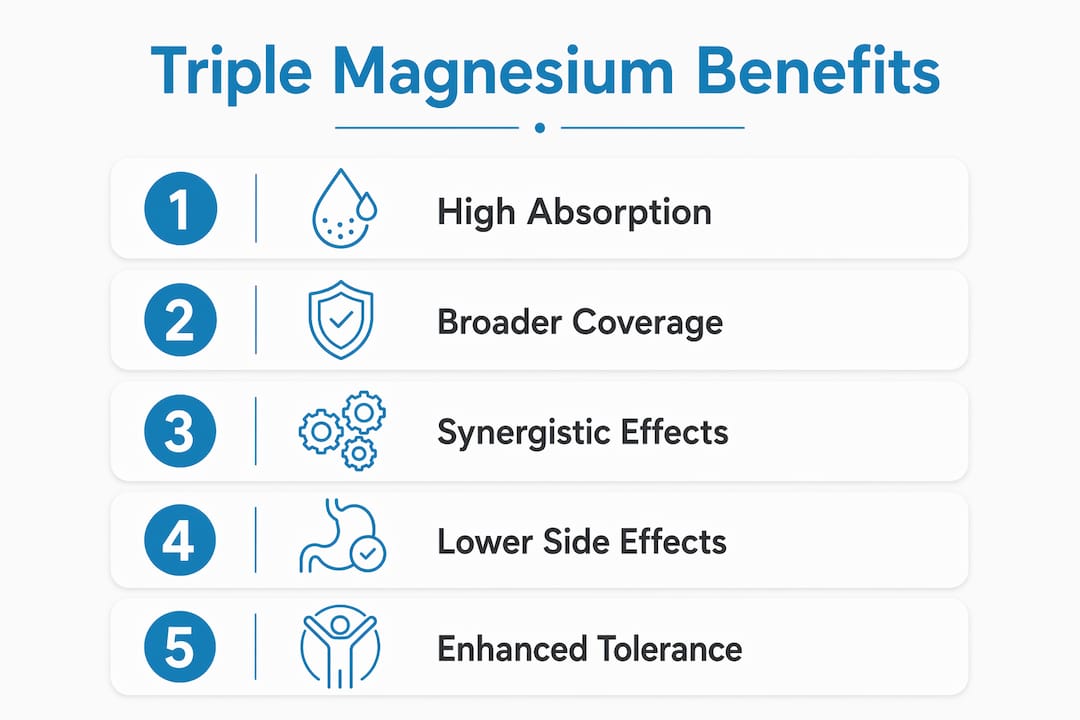
How does triple magnesium compare to taking a single form?
The practical advantage of a blended supplement is coverage. A person who takes only magnesium glycinate gets excellent sleep and relaxation support but misses malate’s contribution to energy metabolism and citrate’s digestive benefits. A triple complex addresses all three in one product.
That said, clinical data on superiority is limited. No large-scale trial has proven that a three-form blend outperforms a well-dosed single form for any specific outcome. The case for triple supplements rests on practical rationale: broader coverage, convenience, and the ability to keep total doses of each form moderate.
- For sleep alone: Magnesium glycinate at an appropriate dose is the more targeted choice.
- For energy and muscle recovery: Magnesium malate is the focused option.
- For digestive regularity: Magnesium citrate handles this most directly.
- For multiple goals at once: A triple complex delivers all three without stacking separate products.
Dose-dependent absorption is a real constraint. Higher doses decrease the percentage of magnesium absorbed, so a balanced formulation that keeps each form at a moderate level is more efficient than a high-dose single-form product. This is one reason blended supplements can make physiological sense even without a superiority claim. Healthcare providers can help you decide which approach fits your specific situation.
What side effects and safety considerations apply to triple magnesium?
Most adults tolerate magnesium supplements well at moderate doses. The recommended daily intake is 320 mg per day for women and 420 mg per day for men, from all sources combined. Supplements under 350 mg daily are generally considered safe.
Common side effects at higher doses include:
- Loose stools or diarrhea, most often linked to citrate and oxide forms
- Nausea, typically at doses above the tolerable upper intake level
- Low blood pressure (hypotension), a risk at pharmacological doses
The tolerable upper intake level for supplemental magnesium in adults is 350 mg per day, excluding food sources. Intakes above this threshold raise the risk of nausea and hypotension. Magnesium from food does not carry the same risk in healthy individuals.
People with kidney disease face a separate concern. The kidneys regulate magnesium excretion, so impaired kidney function can allow magnesium to accumulate to toxic levels. Anyone with a kidney condition should monitor blood magnesium levels and consult a physician before supplementing.

Drug interactions are also worth noting. Magnesium can reduce the absorption of certain antibiotics (particularly tetracyclines and fluoroquinolones), bisphosphonates used for bone density, and some thyroid medications. Spacing magnesium doses two hours apart from these drugs usually mitigates the interaction, but a pharmacist or physician should confirm the timing for your specific regimen.
Starting at a lower dose and increasing gradually gives the body time to adjust, particularly with citrate-containing blends that have a stronger effect on the gut.
Magnesium deficiency in 2026: what experts say about supplementation
Magnesium deficiency is a widespread but underappreciated public health issue. Targeted supplementation helps maintain neurological stability and skeletal strength in people whose dietary intake falls short. Lifestyle factors including high alcohol consumption, chronic stress, and certain medications (diuretics, proton pump inhibitors) accelerate depletion.
Statistic: Each 100 mg per day increase in magnesium intake may reduce type 2 diabetes risk by 6%–15%, based on current research on enzymatic and metabolic function.
Expert guidance consistently emphasizes that more magnesium is not always better. Absorption capacity has a ceiling, and exceeding the tolerable upper intake level adds risk without proportional benefit. The goal is adequacy, not excess.
Populations most likely to benefit from a triple complex include:
- Adults with poor dietary magnesium intake (low vegetable, nut, and whole grain consumption)
- Athletes and people with high physical training loads, where muscle recovery and energy demands are elevated
- Individuals managing chronic fatigue, sleep disruption, or anxiety alongside muscle tension
- Older adults, whose intestinal magnesium absorption tends to decline with age
- People on medications that deplete magnesium
For anyone considering a triple magnesium supplement, consulting a healthcare provider first is the most reliable step. Blood magnesium testing can confirm whether deficiency is actually present, which shapes both the dose and the form selection. Nexoclub’s product range includes supplements designed for people who want to address multiple wellness goals, including muscle recovery and energy support, without stacking multiple separate products.
Pro Tip: If you are new to magnesium supplementation, starting with a glycinate-dominant blend reduces the risk of digestive side effects while still delivering sleep and relaxation benefits. Pair it with a magnesium-rich diet, including spinach, almonds, and pumpkin seeds, for the most consistent results.
For people exploring vitamins for energy and fatigue, magnesium malate is often the most relevant form to prioritize. Natural sleep support, including magnesium glycinate, is also covered in resources like Wizleep’s guide to natural sleep aids for those who want to compare approaches.

Nexoclub carries a curated selection of wellness supplements for people who want science-backed formulations without the guesswork. The Muscle Builder Capsules support strength, endurance, and muscle recovery, making them a practical complement to a magnesium protocol focused on physical performance.
Key Takeaways
Triple form magnesium supplements deliver the broadest mineral coverage when the blend includes high-bioavailability organic forms, kept at doses that stay within the 350 mg daily supplemental limit.
| Point | Details |
|---|---|
| Three forms, three roles | Glycinate supports sleep and relaxation; malate aids energy and recovery; citrate improves absorption and gut health. |
| Absorption is dose-dependent | Higher doses reduce the percentage absorbed, so balanced, moderate-dose blends are more efficient than high-dose single forms. |
| Safe upper limit | Supplemental magnesium above 350 mg per day raises risk of nausea and hypotension; daily needs are 320 mg for women and 420 mg for men from all sources. |
| Organic forms outperform inorganic | Glycinate, citrate, and malate absorb better than magnesium oxide, which is better suited to pharmacological gut use than systemic repletion. |
| Consult before supplementing | Kidney disease, certain medications, and individual deficiency status all affect which form and dose is appropriate for you. |