

Azelaic Acid for Sensitive Skin: Evidence and 6–12 Week Results
Azelaic acid clears inflammatory acne, calms rosacea papules and pustules, and fades hyperpigmentation by blocking the enzyme that drives melanin production. Most people tolerate it well, including sensitive skin, with only mild, temporary stinging or dryness as it settles in.
TL;DR:
- Azelaic acid is most effective when used consistently for 6 to 12 weeks for acne and rosacea, and up to 16 weeks for pigmentation.
- Higher strengths of 15% to 20% increase the risk of irritation, especially when treating sensitive skin or using more concentrated formulations.
- It works best with a gentle routine that includes broad-spectrum sunscreen, avoiding harsh toners, and alternating with other actives like retinoids.
- At least a patch test and gradual introduction are necessary to prevent discomfort, with occasional mild irritation expected during initial use.
- It is particularly suitable for darker skin tones prone to hyperpigmentation but less effective for severe cystic acne or persistent redness without papules.
Table of Contents
- What Is Azelaic Acid and How Does It Work?
- Does Azelaic Acid Actually Help Acne?
- How Well Does It Work for Rosacea?
- Can It Fade Dark Spots, Melasma, and PIH?
- How Should You Use Azelaic Acid?
- When Will You See Results?
- What Are the Side Effects and Who Should Be Cautious?
- Author’s Take: Translating the Research Into a Routine
- When Should You Reach for Azelaic Acid First?
- Round Out Your Routine With the Right Support Products
- Where to Read More
- Sources
- FAQ
What Is Azelaic Acid and How Does It Work?
Azelaic acid is a naturally occurring dicarboxylic acid, formulated into creams, gels, foams, and serums at both over-the-counter and prescription strengths. It earns its reputation through several mechanisms working at once, not one single trick.
- Antibacterial action against C. acnes and S. epidermidis, the bacteria strains most linked to breakouts
- Anti-inflammatory effects that calm the redness and swelling behind both acne and rosacea
- Tyrosinase inhibition, which slows melanin synthesis and fades dark spots over time
- Mild keratolytic and comedolytic action that helps unclog pores without the rough exfoliation of stronger acids
Its clinical effect isn’t surface-level exfoliation the way a glycolic acid peel works. It disrupts bacterial protein synthesis and adjusts how skin cells mature, which is part of why it’s gentler than aggressive AHAs and BHAs for most users. Newer liposomal delivery formats can also improve how well the active penetrates skin, which affects both results and comfort.
Does Azelaic Acid Actually Help Acne?
Yes, for both inflammatory and comedonal acne. It fights acne-causing bacteria while also normalizing how skin cells shed inside the follicle, which is what keeps pores from clogging in the first place.
By the numbers: Randomized trials show 20% azelaic acid formulations significantly reduce lesion counts, and in some studies outperformed erythromycin gel, a common topical antibiotic comparator.
Practical points worth knowing before you start:
- Most OTC products sit around 5% to 10%; prescription-strength options run up to 20%
- Twice-daily application is standard once your skin adjusts
- It’s a strong fit for people with darker skin tones who are prone to post-inflammatory hyperpigmentation, since it treats active breakouts and residual dark marks at once
How Well Does It Work for Rosacea?
Trials measured it against vehicle formulas, and the 15% gel showed statistically significant improvement over placebo.
- Studies typically evaluate results at the 12 week mark, not sooner
- A 2024 network meta-analysis found the 20% strength produced the highest effect size on investigator ratings, though the 15% version carried a higher chance of mild adverse events
- Evidence is thinner for rosacea that’s mostly persistent redness without papules or pustules
- Apply a thin layer to fully dry skin and avoid layering it directly under heavy occlusive creams, which can trap irritation
Can It Fade Dark Spots, Melasma, and PIH?
Azelaic acid lightens dark patches by inhibiting tyrosinase, the enzyme that triggers melanin production in overactive pigment cells. That mechanism makes it genuinely useful for post-inflammatory hyperpigmentation and select melasma cases.
Head-to-head result: In comparative trials, 20% azelaic acid outperformed 2% hydroquinone on global improvement scores for melasma, a notable finding given hydroquinone’s long-standing status as the benchmark lightening agent.
- Pair it with daily sunscreen. Unprotected UV exposure can undo weeks of progress
- Consistency matters more than speed. Most pigment improvement builds gradually over multiple weeks
- Many dermatologists recommend it for longer-term maintenance after initial pigment correction, since it’s gentler for continued use than hydroquinone
How Should You Use Azelaic Acid?
Getting results comes down to matching strength to your goal, then introducing it without overwhelming your skin barrier.
- Pick your strength. Reach for 5% for general maintenance and mild acne, 15% gel or foam if rosacea is the target, and 20% only for acne or pigment protocols, ideally with guidance from a dermatologist.
- Patch test first. Apply a small amount to your inner forearm and wait 24 hours before putting it on your face.
- Start slow. Use it every other night for the first one to two weeks, then move to once or twice daily as tolerated.
- Layer with care. Always follow with sunscreen in the morning. If you’re also using retinoids or strong exfoliants, alternate nights instead of stacking them, at least until your skin adjusts.
- Skip alcohol-based astringents and toners on the same routine. They strip the barrier and amplify stinging.
Pro Tip: If your skin turns pink or feels tight within minutes of applying azelaic acid, that’s usually just it working. But if the sting lasts more than a few minutes or you see visible flaking, cut back to every third day before increasing frequency again.
When Will You See Results?
Patience matters more than most people expect. Acne improvement generally shows up within 6 to 12 weeks of consistent twice-daily use. Rosacea’s papules and pustules typically need the full 12 weeks that clinical trials use as their benchmark. Pigmentation is the slowest to respond, often taking 8 to 16 weeks or longer before spots visibly fade.
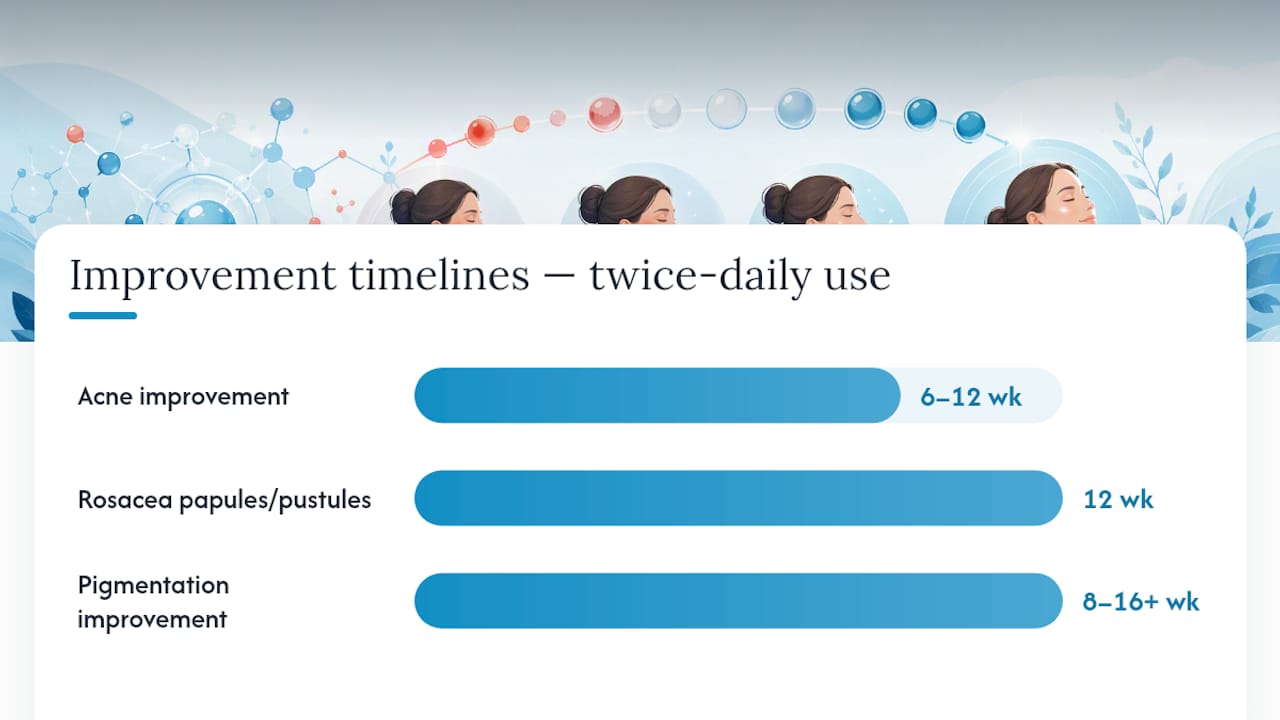
Stopping treatment before these windows close is one of the most common reasons people conclude azelaic acid “didn’t work,” when the timeline simply hadn’t run its course. Inconsistent application, a strength too low for your condition, or a misdiagnosed skin issue (assuming it’s acne when it’s actually folliculitis, for example) can also stall results. If you see zero change past 12 weeks of steady use, it’s worth checking in with a dermatologist rather than switching products on your own.
What Are the Side Effects and Who Should Be Cautious?
Local irritation is the most common complaint, and it’s usually mild and temporary.
- Burning, stinging, or itching, especially in the first two weeks
- Mild dryness or flaking, which tends to ease as your skin adjusts
- Higher concentrations (15% to 20%) carry a somewhat greater chance of these effects, though serious reactions remain rare
Stop use and check in with a clinician if you notice swelling, blistering, or symptoms that worsen instead of settling after two to three weeks. If you’re pregnant or breastfeeding, azelaic acid is generally considered one of the better-tolerated topical options, but confirm with your doctor before adding it to your routine, since individual cases vary.
Author’s Take: Translating the Research Into a Routine
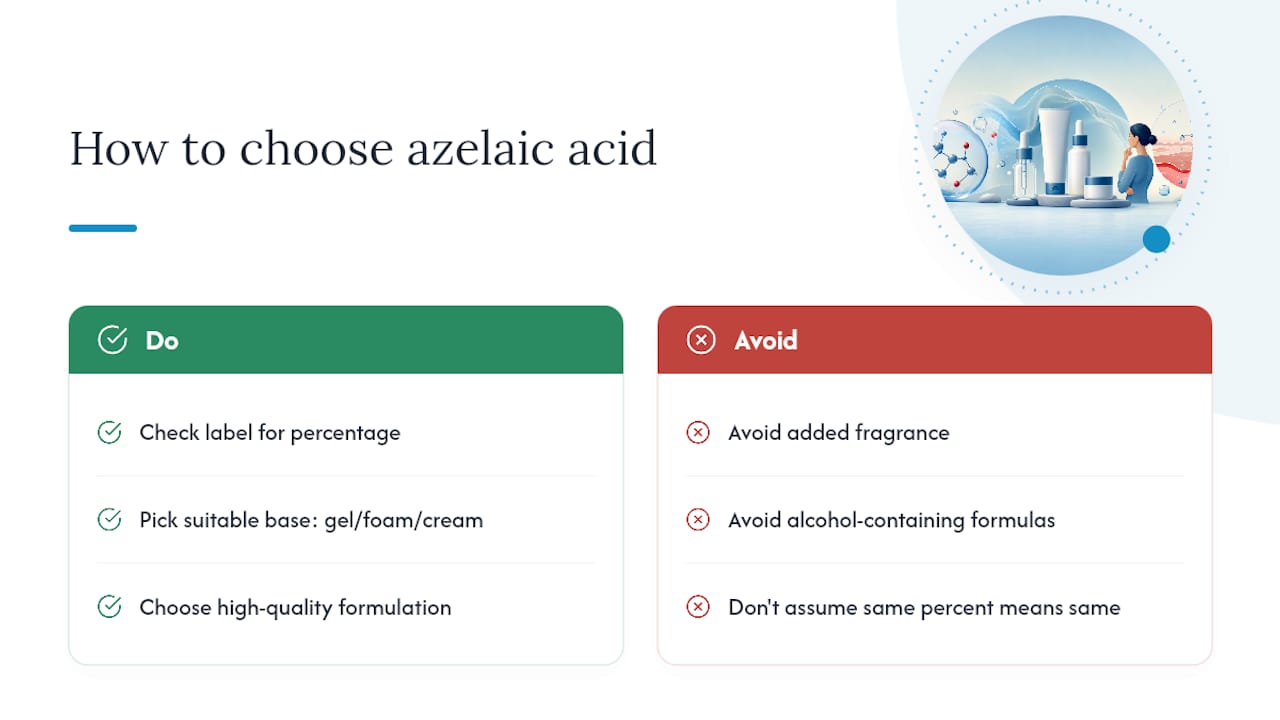
The clinical picture on azelaic acid is unusually consistent for a skincare ingredient: acne trials and rosacea trials both point the same direction, and the pigment data against hydroquinone is hard to dismiss. What that means for you at the shelf is simple. Check the label for the actual percentage, note whether it’s a gel, foam, or cream base, and scan the ingredient list for added fragrance or alcohol that could undercut tolerability. Formulation quality is where products diverge even when the active percentage looks identical.
When Should You Reach for Azelaic Acid First?
Azelaic acid is a smart first move for sensitive inflammatory acne, papulopustular rosacea, and stubborn post-inflammatory dark marks. Severe cystic acne or a diagnosis that isn’t clear deserves a dermatologist’s input before you self-treat. Whatever you pair it with, sunscreen and a gentle cleanser stay non-negotiable.
— Armando
Round Out Your Routine With the Right Support Products
Azelaic acid does its job best when it isn’t fighting a harsh cleanser or missing sunscreen behind it. A skincare and personal care collection can provide routine support as a complementary layer to prescription-strength azelaic acid.
You’ll find gentle cleansers and hydrating formulas that won’t strip your barrier while an active ingredient does its work, which matters most in those first irritation-prone weeks. If you’re stacking actives, our guide on antioxidants for skin walks through an 8 to 12 week plan for pairing them safely. Browse the Skincare & Personal Care collection to build out the rest of your routine around whatever azelaic acid product your dermatologist recommends.
Where to Read More
- Azelaic acid clinical evidence in acne (PMC review)
- DailyMed rosacea gel labeling and trial data
- Mayo Clinic azelaic acid overview
- DermNet azelaic acid topic page
This article is general information, not a substitute for advice from a qualified doctor. Consult a qualified healthcare professional about your own circumstances before acting on anything here.
Sources
- Comparative trial/systematic review on azelaic acid vs hydroquinone
- Azelaic acid clinical evidence in acne (PMC review)
- DailyMed – Azelaic acid gel label and trial summary
FAQ
What Happens if You Use Azelaic Acid Every Day?
Daily use is standard for most formulations once your skin has adjusted, typically applied once or twice a day. Some people start every other day for the first one to two weeks to limit stinging before moving to daily use.
What Should You Never Mix With Azelaic Acid?
Avoid layering it with alcohol-based astringents or toners, since they strip the skin barrier and worsen irritation. If you’re also using a strong retinoid or benzoyl peroxide, alternate nights rather than applying both at once until your skin tolerates the combination.
Is Azelaic Acid Better Than Retinol?
Neither is universally “better.” Azelaic acid tends to cause less photosensitivity and irritation than retinoids, making it a solid entry point for sensitive skin, while retinol has broader evidence for fine lines and overall texture. Many dermatology-aligned routines use both, on alternating nights.
What Are the Downsides of Azelaic Acid?
The main downsides are temporary burning, stinging, or dryness, which tend to fade within the first couple of weeks. Results also take time. Expect 6 to 12 weeks for acne and rosacea, and 8 weeks or more for pigmentation, so it isn’t a fit for anyone wanting overnight change.