

Plant-Based Menopause Supplements: What the Evidence Shows
Plant-based menopause supplements can offer modest, symptom-specific relief for some people. The strongest evidence points to phytoestrogens, particularly soy isoflavones and red clover, for reducing hot flash frequency. Certain herbs, including sage and some standardized black cohosh extracts, show limited but real benefit for specific symptoms. Effects are generally smaller than prescription hormone replacement therapy, and results vary considerably from person to person. The NCCIH notes that evidence is mixed and inconsistent for many botanicals, so setting realistic expectations matters before you start.
Ingredient categories to consider first, by symptom:
- Hot flashes: Soy isoflavones, red clover, sage
- Sleep disturbances: Valerian (limited data), maca, mind-body adjuncts
- Mood and anxiety: Maca, saffron (emerging evidence), chaste tree (Vitex)
- Vaginal dryness: Red clover isoflavones, flaxseed lignans
- Bone and metabolic support: Soy isoflavones, flaxseed
Nexoclub carries a curated range of plant-based options that meet the selection criteria covered in this article.
Table of Contents
- Which plant-based ingredients are used for menopause, and what do they target?
- What does clinical research say about herbal supplements for menopause?
- What safety risks and drug interactions should you know about?
- How do you choose a safe, effective plant-based menopause supplement?
- How long before you may notice results, and what should you expect?
- Why combining supplements with lifestyle changes produces better results
- Key Takeaways
- The case for evidence-first, plant-based care
- Nexoclub’s plant-based menopause supplement options, available in the U.S.
- Authoritative sources and further reading
Which plant-based ingredients are used for menopause, and what do they target?
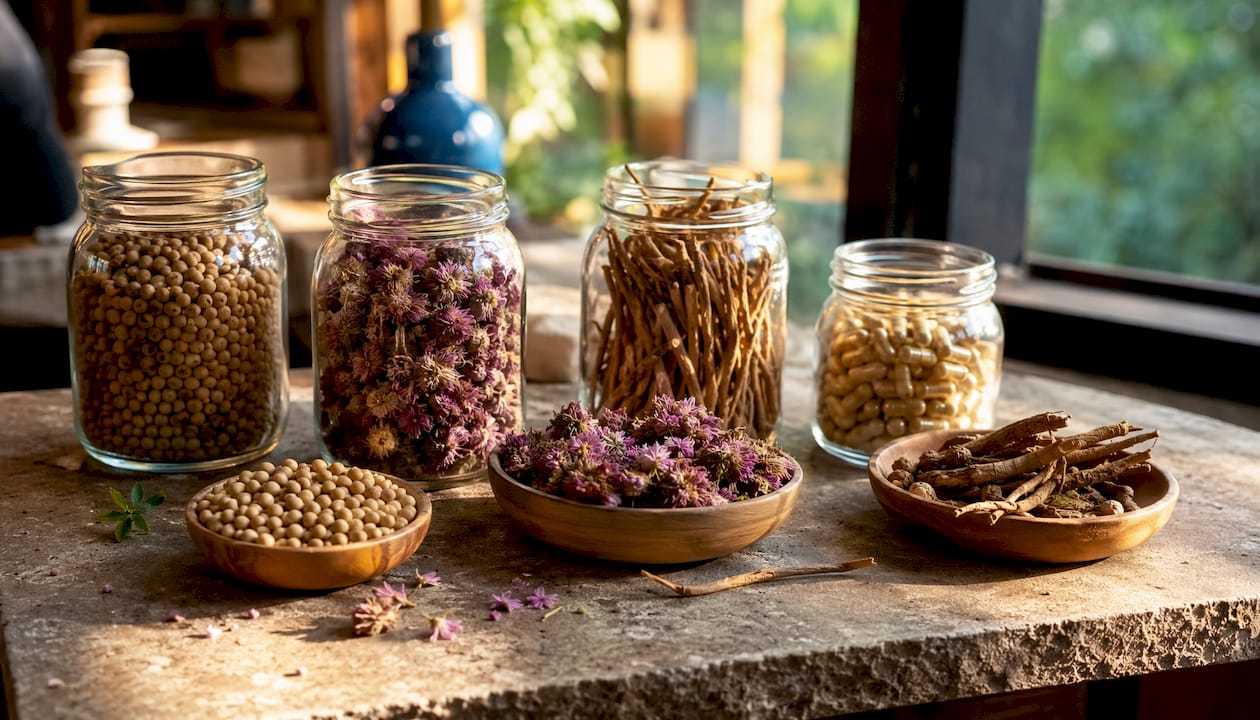
The table below covers the most commonly used botanical and plant-derived ingredients in U.S.-marketed menopause supplements, the symptoms each primarily targets, and a short note on evidence strength.
| Ingredient | Primary symptom target | Typical form | Evidence note | Key safety flag |
|---|---|---|---|---|
| Soy isoflavones | Hot flashes, bone health | Standardized extract, tablet | Modest, consistent in some trials | Estrogenic activity; caution with hormone-sensitive conditions |
| Red clover | Hot flashes, vaginal dryness | Standardized extract | Mixed; benefit in severe hot flashes | Estrogenic activity; anticoagulant interaction possible |
| Black cohosh | Hot flashes, mood | Standardized extract (e.g., Remifemin) | Inconsistent across extracts | Rare liver injury reports |
| Sage | Hot flashes, night sweats | Dried leaf, extract | Limited but positive small trials | High doses may cause toxicity |
| Maca root | Mood, energy, libido | Powder, capsule | Preliminary; insufficient large trials | Generally well tolerated |
| Evening primrose oil | Vaginal dryness, hot flashes | Softgel (oil) | Weak; most trials show minimal benefit | May interact with anticoagulants |
| Chaste tree (Vitex) | Mood, PMS-type symptoms | Standardized extract | Limited menopause-specific data | May interact with dopaminergic drugs |
| Flaxseed | Hot flashes, bone health | Ground seed, lignan extract | Modest; lignans act as weak phytoestrogens | Generally safe; high fiber may affect absorption |
Whole herbs vs. standardized extracts
The distinction between a whole-herb preparation and a standardized extract is not a marketing detail. It determines whether a product delivers the same active compound concentration used in clinical trials. A whole dried sage leaf capsule and a sage extract standardized to a specific percentage of rosmarinic acid are not interchangeable. NCCIH research confirms that because trials use different extract types and standardizations, matching the product’s extract ratio and standardized marker to what was studied is critical. Without that match, trial results may not generalize to the product you are buying.
Standardized extracts list the active marker compound and its concentration on the label, for example “40 mg soy isoflavones per serving” or “black cohosh extract standardized to 2.5% triterpene glycosides.” Whole-herb products rarely guarantee that concentration batch to batch.
Key points on formulation:
- Standardized extracts offer more reproducible dosing than whole-herb preparations.
- Look for the mg amount of the active marker, not just the total herb weight.
- Liquid extracts and tinctures vary widely in concentration; capsules and tablets are easier to dose consistently.
What does clinical research say about herbal supplements for menopause?
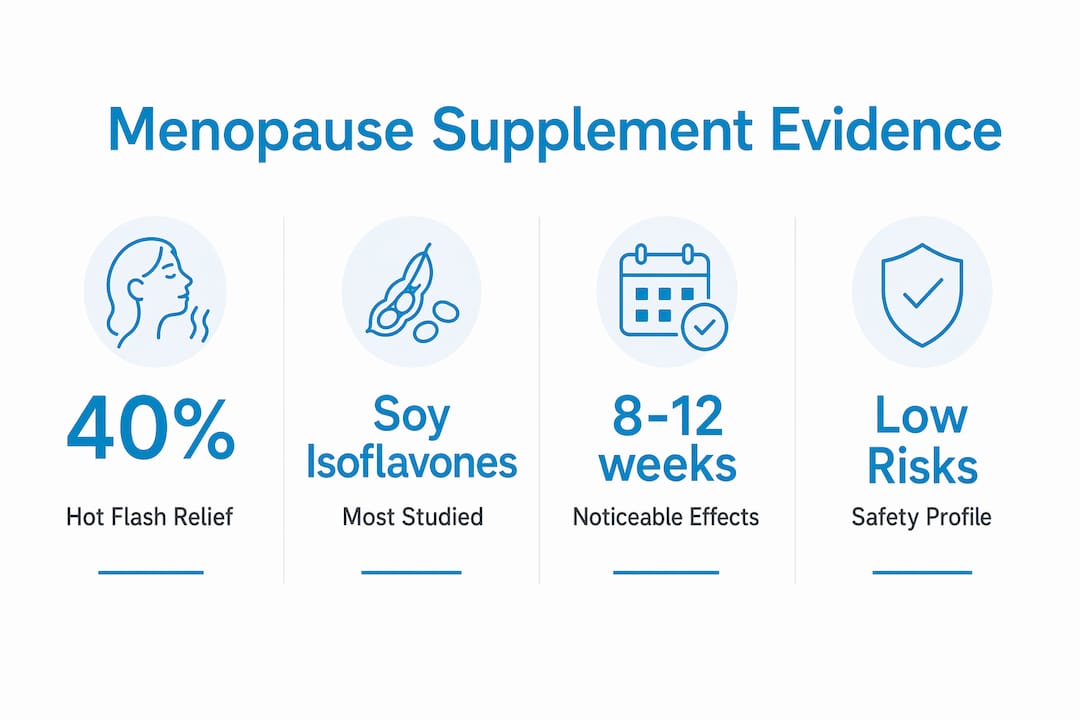
The overall picture from systematic reviews is cautiously positive for hot flashes and largely inconclusive for other symptoms. A 2016 JAMA systematic review and meta-analysis found variable effects from plant-based therapies overall, with the most consistent improvements seen for hot flash frequency, but heterogeneity between studies was high. A more recent 2026 systematic review in Archives of Gynecology and Obstetrics reached a similar conclusion: improvements are most consistent for hot flashes, but effect sizes and direction vary widely depending on sample size and study design.
Systematic reviews summarized by NCBI Bookshelf show that soy isoflavones can modestly reduce the frequency and intensity of hot flashes in some trials, though effects are usually small and study quality varies. Red clover may reduce hot flash frequency in women with severe hot flashes and may improve vaginal dryness in certain trials, but evidence is mixed overall. Black cohosh extracts have produced inconsistent results; some standardized European extracts showed symptom reductions while other studies found no benefit.
What the numbers actually mean: When a meta-analysis reports a statistically significant reduction in hot flash frequency with soy isoflavones, the absolute difference is often one to two fewer hot flashes per day compared to placebo. That is real, but it is not the same as symptom elimination.
Why results are so inconsistent:
- Trials use different extract types, standardizations, and doses, making pooled comparisons unreliable.
- Study durations are often short (8–12 weeks), which may not capture long-term effects.
- Placebo response rates in menopause trials are high, sometimes 30–50%, which compresses the apparent treatment effect.
- Publication bias favors positive results, so the published literature may overstate average benefit.
Larger, higher-quality trials consistently show smaller effects than smaller early studies. Prioritizing evidence from well-designed, adequately powered trials gives a more accurate picture of what these supplements can realistically do.
What safety risks and drug interactions should you know about?
“Natural” does not mean without risk. Botanical extracts are biologically active compounds. Treating them with the same caution you would apply to a prescription medication is the right approach.
High-priority safety warnings:
- Estrogenic activity: Soy isoflavones, red clover, and flaxseed lignans act as weak estrogens. People with a history of hormone-sensitive cancers (breast, uterine, ovarian) should consult an oncologist before using phytoestrogen-containing supplements.
- Liver injury: Rare cases of liver injury have been reported with some black cohosh products. Stop use and seek medical attention if you notice jaundice, dark urine, or unusual fatigue.
- Anticoagulant interactions: Red clover and evening primrose oil may interact with blood thinners such as warfarin. If you take an anticoagulant, check with your pharmacist before adding any herbal supplement.
- St. John’s wort: Frequently included in mood-support blends, it interacts with a wide range of prescription drugs, including antidepressants, birth control pills, and antiretrovirals. The Office on Women’s Health explicitly flags supplement-drug interactions as a reason to consult a clinician before starting.
- Chaste tree (Vitex): May interact with dopaminergic medications and hormonal contraceptives.
Who should consult a clinician before starting:
- Anyone currently on hormone replacement therapy
- People taking blood thinners, antidepressants, or immunosuppressants
- Those with a history of liver disease
- Anyone with a personal or family history of hormone-sensitive cancer
The FDA does not evaluate dietary supplements for safety or efficacy before they reach the market, which means purity and potency are not guaranteed. The NHS similarly notes that herbal remedies are not tested and regulated the same way as medicines, making dosing and safety less certain.
Drug interaction checklist to bring to your clinician or pharmacist:
- List every supplement you are considering, including the ingredient name and dose.
- Include all current prescription and over-the-counter medications.
- Flag any history of liver disease, hormone-sensitive conditions, or clotting disorders.
- Ask specifically about CYP450 enzyme interactions, which affect how many drugs are metabolized.
Pro Tip: Before purchasing, search the supplement’s primary ingredient on the NIH Office of Dietary Supplements database (ods.od.nih.gov) for a current safety summary. It takes two minutes and gives you a clinician-ready reference.
How do you choose a safe, effective plant-based menopause supplement?
Selection comes down to five practical steps. Skipping any one of them increases the chance of buying a product that either does not work or carries avoidable risk.
-
Identify the specific symptom you want to address. Hot flashes, sleep disruption, mood changes, and vaginal dryness each have different ingredient candidates with different evidence bases. A product marketed broadly for “menopause support” may not contain the right ingredient at the right dose for your primary concern.
-
Confirm the ingredient and its standardized dose. Match the active marker and mg amount to what clinical trials used. For soy isoflavones, trials showing modest hot flash reduction used a moderate standardized dose of total isoflavones per day. For black cohosh, look for extracts standardized to triterpene glycosides, with doses matching those used in clinical studies.
-
Check for third-party testing. Look for seals from USP, NSF International, or ConsumerLab. These organizations independently verify that a product contains what the label states, at the stated dose, without harmful contaminants. Third-party testing is a practical quality proxy precisely because the FDA does not preapprove supplements. For vegan credentials, look for a certified vegan or plant-based seal from a recognized certifying body.
-
Verify vegan and non-GMO status if those matter to you. Gelatin capsules are common in supplement manufacturing. A product can contain plant-derived ingredients inside a non-vegan capsule. Check the capsule material explicitly, not just the ingredient list.
-
Avoid products with these red flags:
- “Bioidentical” marketing on an over-the-counter supplement. Bioidentical hormones are a clinical category; an unregulated supplement cannot be bioidentical in any meaningful, verified sense. The NHS cautions that products labeled this way are unregulated for dose and purity unless produced under clinical conditions.
- Proprietary blends that list multiple ingredients without disclosing the mg per ingredient. You cannot verify dose or match it to trial data.
- Claims that a supplement “balances hormones” or “eliminates” symptoms. No over-the-counter plant-based supplement has regulatory approval for those claims.
- No extract standardization information. If the label says only “black cohosh root 500 mg” with no standardization marker, you have no way to know what active compound concentration you are getting.
What a helpful label looks like:
A well-labeled product states the ingredient name and botanical source, the extract form (e.g., “Trifolium pratense extract”), the standardization marker and percentage (e.g., “standardized to 8% isoflavones”), the mg per serving, and a third-party testing seal. Nexoclub’s NAD+ supplement product page is a useful example of how transparent ingredient labeling looks in practice.
How long before you may notice results, and what should you expect?
Realistic timelines prevent both premature abandonment and prolonged use of something that is not working.
- Hot flashes with soy isoflavones or red clover: Most trials run 8–12 weeks. Some people notice a modest reduction in frequency or intensity within 4 weeks; others see no change at 12 weeks. If there is no meaningful change by week 12, the ingredient is unlikely to work for you.
- Mood and energy with maca: Preliminary studies suggest changes in self-reported mood and energy within 6–8 weeks, though the evidence base is thin.
- Vaginal dryness: Red clover isoflavones showed some benefit in vaginal tissue in certain trials, but timelines varied across studies and effects were modest.
- Sleep: No single plant-based supplement has strong, consistent evidence for sleep improvement in menopause. Mind-body practices tend to outperform supplements here.
On the placebo effect: Placebo response rates in menopause supplement trials are genuinely high. A meaningful portion of people who feel better on a supplement would have felt better on a placebo. That does not make the perceived benefit worthless, but it does mean that subjective improvement alone is not proof the ingredient is working.
Tracking progress: Keep a simple hot-flash diary or sleep log for two weeks before starting a supplement to establish a baseline. Track the same metrics weekly during your trial period. Concrete data helps you and your clinician make an objective decision at the 8–12 week mark rather than relying on memory.
If you experience side effects at any point, stop use and consult a clinician. Do not extend a trial beyond 12 weeks without a clear reason and clinician input.
Why combining supplements with lifestyle changes produces better results
NCCIH evidence shows that mind-body practices such as yoga, meditation, and hypnosis have demonstrated more consistent evidence for reducing hot flash intensity and sleep disturbances than many single herbal supplements. That finding is worth taking seriously when you are building a symptom management plan.
High-value adjuncts with research support:
- Cognitive behavioral therapy (CBT): Structured CBT programs for menopausal symptoms have shown consistent reductions in hot flash distress and sleep disruption in multiple trials.
- Paced breathing: Slow, diaphragmatic breathing practiced during hot flashes reduces perceived intensity in controlled studies.
- Yoga: Regular practice shows modest improvements in sleep quality, mood, and hot flash frequency.
- Weight-bearing exercise: Supports bone density, mood, and metabolic health, all of which shift during menopause.
- Dietary patterns: Mediterranean-style eating, higher in legumes and phytoestrogen-rich foods, may provide background phytoestrogen exposure that complements a supplement protocol.
A practical 8–12 week multi-modal plan:
- Establish a two-week symptom baseline using a hot-flash diary and sleep log.
- Select one evidence-backed supplement ingredient matched to your primary symptom (see the ingredients table above).
- Add one mind-body practice, starting with paced breathing or a beginner yoga class, three times per week.
- Track both metrics weekly.
- At week 8, review your log. If the supplement shows no change, consider stopping it while continuing the lifestyle practice.
- At week 12, bring your log to a clinician appointment for a full review.
The logic here is straightforward. Supplements address one pathway; lifestyle practices address several simultaneously, including stress response, sleep architecture, and cardiovascular tone. Combining them reduces dependence on any single intervention and gives you more data points for what is actually working. For mood support specifically, supplements for emotional balance can complement this kind of structured plan.
Key Takeaways
Plant-based menopause supplements offer the most consistent evidence for hot flash relief, particularly with soy isoflavones and red clover, but effects are modest, safety checks are non-negotiable, and combining supplements with lifestyle practices produces better outcomes than supplements alone.
| Point | Details |
|---|---|
| Evidence is modest and symptom-specific | Soy isoflavones and red clover show the most consistent data for hot flashes; other symptoms have weaker evidence. |
| Standardized extracts matter | Match the active marker and mg dose to what clinical trials used; whole-herb products cannot guarantee consistent potency. |
| Third-party testing is the quality standard | Look for USP, NSF, or ConsumerLab seals; the FDA does not preapprove supplements for safety or efficacy. |
| Allow an 8–12 week trial window | Track symptoms before and during use; stop if no change by week 12 or if side effects appear. |
| Nexoclub’s curated selection | Nexoclub offers vetted, plant-based supplement options with transparent labeling available in the U.S. |
The case for evidence-first, plant-based care
The supplement industry around menopause is large, and the marketing is often far ahead of the science. Products promise hormonal balance, symptom elimination, and bioidentical effects. None of those claims hold up under scrutiny for over-the-counter plant-based supplements. What the evidence actually supports is narrower and more specific: modest hot flash reduction with phytoestrogens in some people, limited benefit for mood and sleep from certain herbs, and meaningful improvement in overall symptom burden when supplements are combined with mind-body practices and lifestyle changes.
The right approach is not to dismiss plant-based options. Soy isoflavones and red clover have real, if modest, trial data behind them. Sage has shown promise in small studies. The problem is not the plants. The problem is the gap between what products claim and what the evidence supports, and the absence of regulatory oversight that would otherwise close that gap. Choosing standardized extracts, verifying third-party testing, and consulting a clinician before starting are not bureaucratic steps. They are the difference between a supplement that might help and one that definitely wastes money or causes harm.
Nexoclub’s approach to supplement curation reflects this standard: transparent labeling, clear ingredient sourcing, and product options that align with the selection criteria in this article.
Nexoclub’s plant-based menopause supplement options, available in the U.S.
Nexoclub’s supplement collection gives you a direct path from the research in this article to products that meet the selection criteria you just read about: transparent ingredient labeling, standardized extract forms, and clear dosing information.
The Nexoclub supplements and nutrition collection includes plant-based options targeting the primary symptom categories covered here, including phytoestrogen-containing formulas and botanical extracts with disclosed standardization. Each product page lists the ingredient form, mg per serving, and relevant certifications, so you can match what you see to the trial data before you buy. For readers managing mood and energy alongside physical symptoms, Nexoclub’s all-in-one vegan supplement options offer multi-nutrient formulas with plant-based credentials verified on the label.
Before starting any supplement, consult your clinician or pharmacist, particularly if you are on prescription medications or have a history of hormone-sensitive conditions. Browse the full collection and check current product availability at Nexoclub’s supplements store.
Authoritative sources and further reading
- NCCIH: Menopausal symptoms and complementary health approaches — The most comprehensive U.S. government evidence summary on botanical and mind-body approaches for menopause; covers black cohosh, soy, red clover, and more.
- Office on Women’s Health: Menopause treatment — Plain-language overview of all menopause treatment options, including supplement safety warnings and the FDA’s regulatory position.
- NCBI Bookshelf: Relieving menopause symptoms on your own — InformedHealth.org summary of self-management options including phytoestrogen evidence and dosing context.
- JAMA 2016 systematic review: Plant-based therapies and menopausal symptoms — Peer-reviewed meta-analysis covering effect sizes and heterogeneity across plant-based interventions.
- Archives of Gynecology and Obstetrics 2026 systematic review — Most recent large meta-analysis of complementary and alternative therapies for menopausal symptoms.
- NHS: Herbal remedies and complementary medicines for menopause — UK clinical guidance on regulation gaps, bioidentical claims, and safety considerations for herbal menopause products.
This article is general health information, not medical advice. Confirm current guidance and your individual suitability with a qualified clinician or pharmacist before starting any supplement.